

Healthcare data is harder to annotate well than most data. It needs clinical expertise, careful privacy handling, a plan for expert disagreement, and clear records of how labels were made. This article covers six things healthcare AI teams should get right, and a checklist to use before you start.
AI is being built to help with tasks across healthcare, from reading scans and pathology slides to organizing clinical notes. Every one of those models starts the same way: people label data so the model can learn from it. How well that labeling is done shapes how the model behaves.
Healthcare adds pressures that most other fields do not have. The data is personal, the labels often depend on clinical judgment, and the people who rely on the results may be making decisions that affect patients. This article focuses on what that means for annotation.
What gets annotated in healthcare
The kinds of data, and the kinds of labels, vary widely:
- Medical images such as X-rays, CT, MRI, and ultrasound, where annotators may classify an image, draw a box around a finding, outline a structure pixel by pixel (segmentation), or mark landmarks.
- Pathology and microscopy images, where labels may include cell types, tissue regions, and boundaries.
- Clinical text such as notes and reports, where annotators may mark medical terms, conditions, medications, or relationships between them.
- Other signals and records, depending on the project.
The right approach depends on the data type, but the same six principles apply across all of them.
Six things to get right
1. Clinical expertise in the loop
Many healthcare labels cannot be done reliably from general instructions alone. Telling a harmless variation from a significant finding takes training. Make sure qualified people define the hard cases, review the work, and make the final call on difficult examples. Be specific about whose expertise is involved at each stage, and ask your annotation partner to be specific too.
2. Patient privacy and de-identification
Healthcare data often contains information that can identify a person, and it is not always where you expect it. Image files can carry personal details in their metadata, and some images have names or dates printed in the picture itself. Clinical text can mention names, places, and dates.
As a result, privacy needs a plan before any data is shared: what is removed, who checks it, and who has access. Rules such as HIPAA in the United States and GDPR in Europe, along with local laws and your own agreements, set the requirements. Because these rules depend on where you are and what data you hold, talk to your legal or compliance team rather than relying on general articles, including this one.
3. A plan for uncertainty and expert disagreement
In medicine, qualified experts do not always agree, and some cases are genuinely borderline. That is normal, and a good process handles it openly instead of hiding it. Decide in advance how disagreements are resolved, for example by a senior reviewer or a panel, and whether uncertain cases should be labeled as uncertain, set aside, or reviewed separately. Recording the level of disagreement also tells you which parts of your data are hardest.
4. Data that represents the people the model will serve
A model learns from the examples it sees. If the data comes from one hospital, one type of scanner, or one group of patients, the model may perform worse on others. Rare conditions are also easy to under-represent, because there are few examples to learn from. Think about the range of images, equipment, and patients in your dataset, and write down what it does and does not cover.
5. Guidelines tied to clear clinical definitions
Vague labels cause inconsistent data. Write definitions that name the finding, say what counts and what does not, and show examples and counter-examples. Where an accepted clinical definition or standard exists, refer to it so everyone works from the same meaning. When definitions change during a project, record the change and apply it consistently.
6. Documentation and traceability
Healthcare AI is often reviewed by researchers, partners, and sometimes regulators. They will want to know how the data was produced. Keep records of where the data came from, who labeled and reviewed it, which version of the guidelines was used, how quality was checked, and what the limitations are. Good records make the dataset easier to trust, to reproduce, and to improve.
What annotation is not
Annotation produces training data. It is not a diagnosis, and labeled data does not make a model safe or accurate by itself. Models still need independent testing on appropriate data, and clinical use needs proper evaluation and human oversight. Being clear about this keeps expectations realistic, and protects both the project and the people it is meant to help.
A checklist before you start
- Do we know exactly what needs to be labeled, and have we defined it in writing?
- Which qualified people will define, review, and settle difficult cases?
- Has our legal or compliance team approved how the data will be de-identified, shared, and stored?
- Have we checked the images or text themselves for identifying details, not just the data fields?
- How will we handle uncertain cases and expert disagreement?
- Does our data represent the settings and patients the model will be used with?
- Will we keep records of guidelines, reviews, and limitations?
- Do we have a plan to test the model independently once it is trained?
The takeaway
Good healthcare annotation is a combination of clinical knowledge, careful privacy practice, honest handling of uncertainty, and clear records. None of it is quick, but fixing a problem in the data early is far easier than discovering it after a model is built.
We begin by annotating a small sample to your guidelines, so you can review the results and agree on the approach before scaling up.
More from the blog
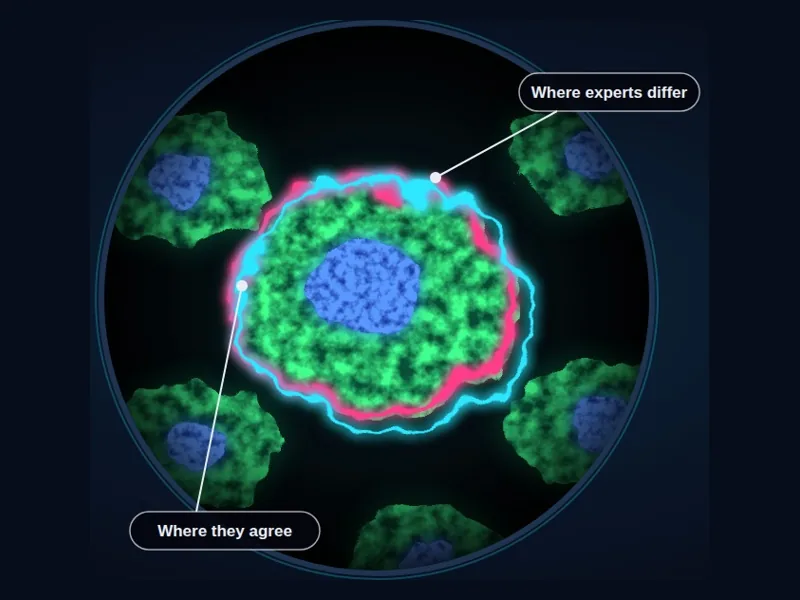
Inter-Annotator Agreement: What It Tells You About Your AI Dataset (and What It Doesn't)
Inter-annotator agreement measures how consistently different people label the same data. It is one of the most practical ways to check dataset quality, but it has limits. This article explains how it works, which metrics to use, what low agreement means, and how to improve it.
Read more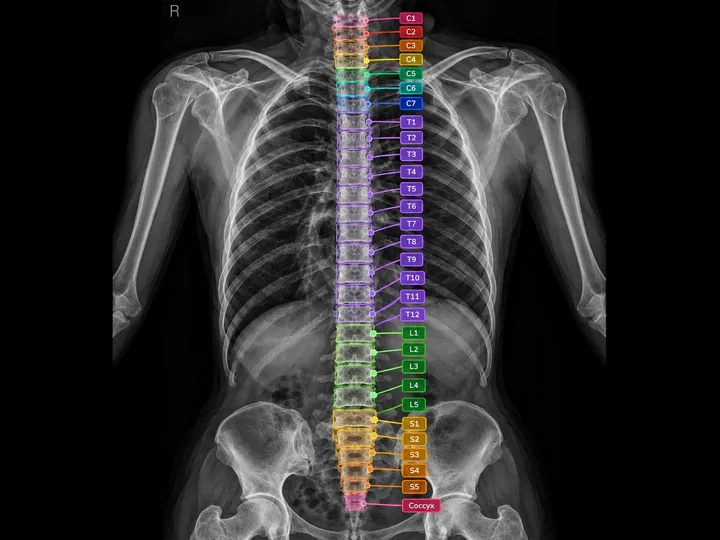
What Makes AI Data Trustworthy? A Guide for Scientific and Medical AI
Trustworthy AI data comes from five practices: clear guidelines, real domain expertise, measured agreement between annotators, documented quality checks, and honest records of where the data came from. This article explains each one and lists questions to ask any data partner.
Read more